

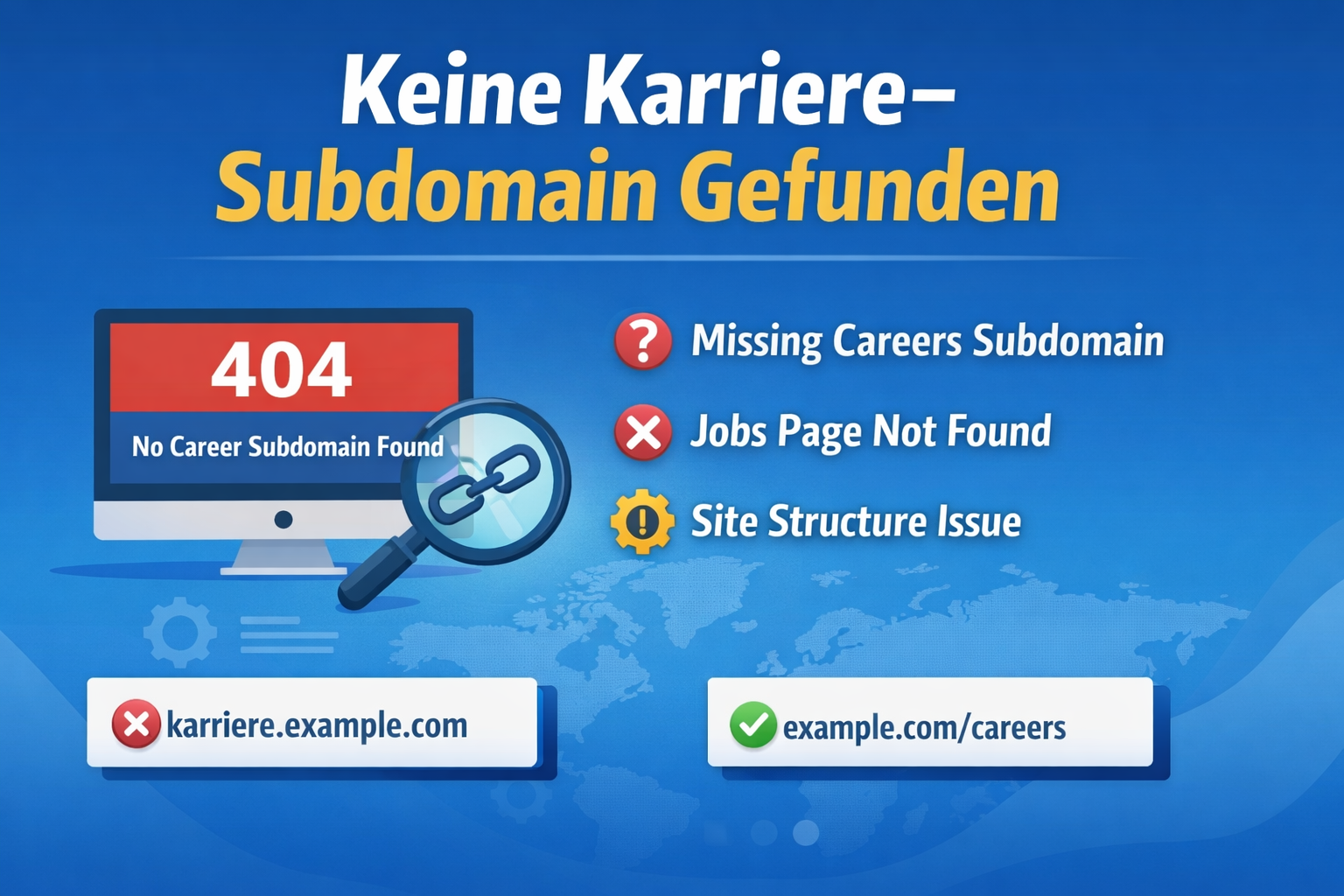
The phrase keine karriere-subdomain gefunden may look confusing at first, especially for readers who do not speak German. It often appears in technical reports, SEO audits, or website analysis tools. When people see it, they usually wonder whether their website has a serious problem.
In simple terms, this phrase points to the absence of a dedicated career-related subdomain on a website. It does not always mean something is broken. In many cases, it is only a notice that a jobs or careers subdomain was not detected during a scan.
What Does Keine Karriere-Subdomain Gefunden Mean?
The direct English meaning of keine karriere-subdomain gefunden is “no career subdomain found.” A subdomain is a separate section of a website, such as careers.example.com or jobs.example.com. The message simply says that such a section was not found.
This phrase is mostly used in digital marketing, technical SEO, and website auditing contexts. Tools look for career sections because they often signal hiring activity, structured content, and business growth. If none is found, the tool reports that result using this phrase.
Why This Message Appears on a Website
There are several reasons why keine karriere-subdomain gefunden may appear in an audit or website report. The most common reason is very simple: the website does not use a dedicated career subdomain. Instead, it may place job listings under a regular page.
Another reason is that the site may not have a hiring section at all. Some businesses are not actively recruiting, so they do not create a jobs page. In such cases, the message is only describing the site structure, not identifying a technical failure.
Career Subdomain vs Career Page
What Is a Career Subdomain?
A career subdomain is a separate part of a website used only for job-related content. Examples include careers.companyname.com or jobs.companyname.com. Large companies often use this structure to organize recruitment information in a clean and focused way.
This setup helps businesses keep hiring content separate from their main service or product pages. It can also make navigation easier for job seekers. A clear subdomain sometimes improves user experience because visitors immediately know where to look for vacancies.
What Is a Career Page?
A career page is a normal page inside the main website, such as companyname.com/careers or companyname.com/jobs. Many small and medium-sized businesses prefer this structure because it is easier to manage and does not require extra technical setup.
This method is also common and effective. A website does not need a subdomain to have a strong hiring section. As long as the page is easy to find, well-organized, and properly indexed, it can perform just as well for users and search engines.
Is Keine Karriere-Subdomain Gefunden an Error?
Many people assume that keine karriere-subdomain gefunden is a serious error message. In reality, it is often just an informational notice. It tells the user or analyst that no separate career subdomain was detected during a scan or review.
However, context matters. If a company intended to create a careers subdomain but set it up incorrectly, then the message may point to a real issue. In that case, the problem could involve DNS settings, poor linking, or incorrect website configuration.
Common Reasons for Keine Karriere-Subdomain Gefunden
One common reason is that the business simply uses a career page instead of a subdomain. Another possibility is that the company has not created any hiring section at all. In both cases, the report will say that no career subdomain was found.
Sometimes the reason is more technical. A careers subdomain may exist, but it is blocked from crawling, not linked properly, or hidden behind scripts that an audit tool cannot read. This can make the subdomain invisible to scanners even when it is live.
How Website Structure Affects This Message
Website structure plays a major role in whether tools detect job-related sections. If a website uses clean navigation and clear internal links, it becomes easier for crawlers to discover important pages. A strong structure supports better indexing and better visibility overall.
On the other hand, a poor structure can hide valuable content. If the careers section is buried too deeply or disconnected from the main menu, tools may miss it. That can lead to keine karriere-subdomain gefunden appearing even when hiring content exists somewhere on the site.
SEO Impact of Keine Karriere-Subdomain Gefunden
Does It Hurt Rankings?
By itself, keine karriere-subdomain gefunden does not automatically hurt search rankings. Search engines do not require every company to use a separate subdomain for jobs. Many websites rank well with a simple careers page inside the main domain.
What matters more is the quality and accessibility of the content. If the hiring page is useful, easy to navigate, mobile-friendly, and indexed correctly, it can still support a strong SEO strategy. The absence of a subdomain alone is not a ranking penalty.
When It Can Matter for SEO
It can matter when the missing subdomain reflects a deeper issue. For example, if a company wants job-related traffic but has no visible recruitment content, it may miss opportunities in search results. Poor internal linking can also reduce discoverability.
SEO problems may appear when pages are not indexed, URLs are confusing, or structured content is missing. In such situations, the message becomes a clue rather than the main problem. The real issue is often the hidden weakness in website planning or execution.
How to Check If a Career Section Exists
The easiest way to check for a career section is to look through the website’s main menu, footer, and search bar. Pages labeled “Careers,” “Jobs,” “Work With Us,” or “Vacancies” often serve the same purpose, even without a subdomain.
You can also use search engines to check. Searching the site name with terms like careers or jobs can reveal hidden pages. Reviewing the XML sitemap and internal links is another smart way to confirm whether the site has a proper recruitment area.
How to Fix Keine Karriere-Subdomain Gefunden
If you want to fix keine karriere-subdomain gefunden, first decide whether you actually need a career subdomain. If a simple page is enough for your website, create a strong /careers or /jobs page and make sure it is linked from important areas.
If you prefer a subdomain, set it up carefully. Check DNS settings, connect it correctly to your hosting, and make sure search engines can crawl it. After launching, test the subdomain in audit tools and verify that users can access it without confusion.
Best Practices for a Career Section
A good career section should be simple, clear, and useful. It should explain the company culture, list current vacancies, and show visitors how to apply. Easy navigation is essential because job seekers do not want to waste time searching for basic information.
It is also smart to make the content SEO-friendly. Use clear page titles, readable URLs, descriptive headings, and updated job details. A mobile-friendly design matters too, because many candidates search for opportunities using phones rather than desktop computers.
When You Do Not Need a Career Subdomain
Not every business needs a separate hiring subdomain. A small business, local service, or company with rare hiring activity may do perfectly well with a single page on the main website. In such cases, a subdomain may add unnecessary complexity.
The best approach depends on the size and goals of the business. If hiring is a major focus and many job listings are updated often, a dedicated subdomain can help. If recruitment is limited, a simple page may be the smarter and cleaner option.
Final Thoughts
The phrase keine karriere-subdomain gefunden sounds technical, but its meaning is quite straightforward. It usually tells you that no separate career subdomain was found during a website check. In many situations, this is only an observation, not a dangerous error.
The most important lesson is to focus on usefulness rather than labels. Whether you use a subdomain or a normal page, your hiring content should be accessible, clear, and easy to find. That is what truly matters for both users and SEO success.
