

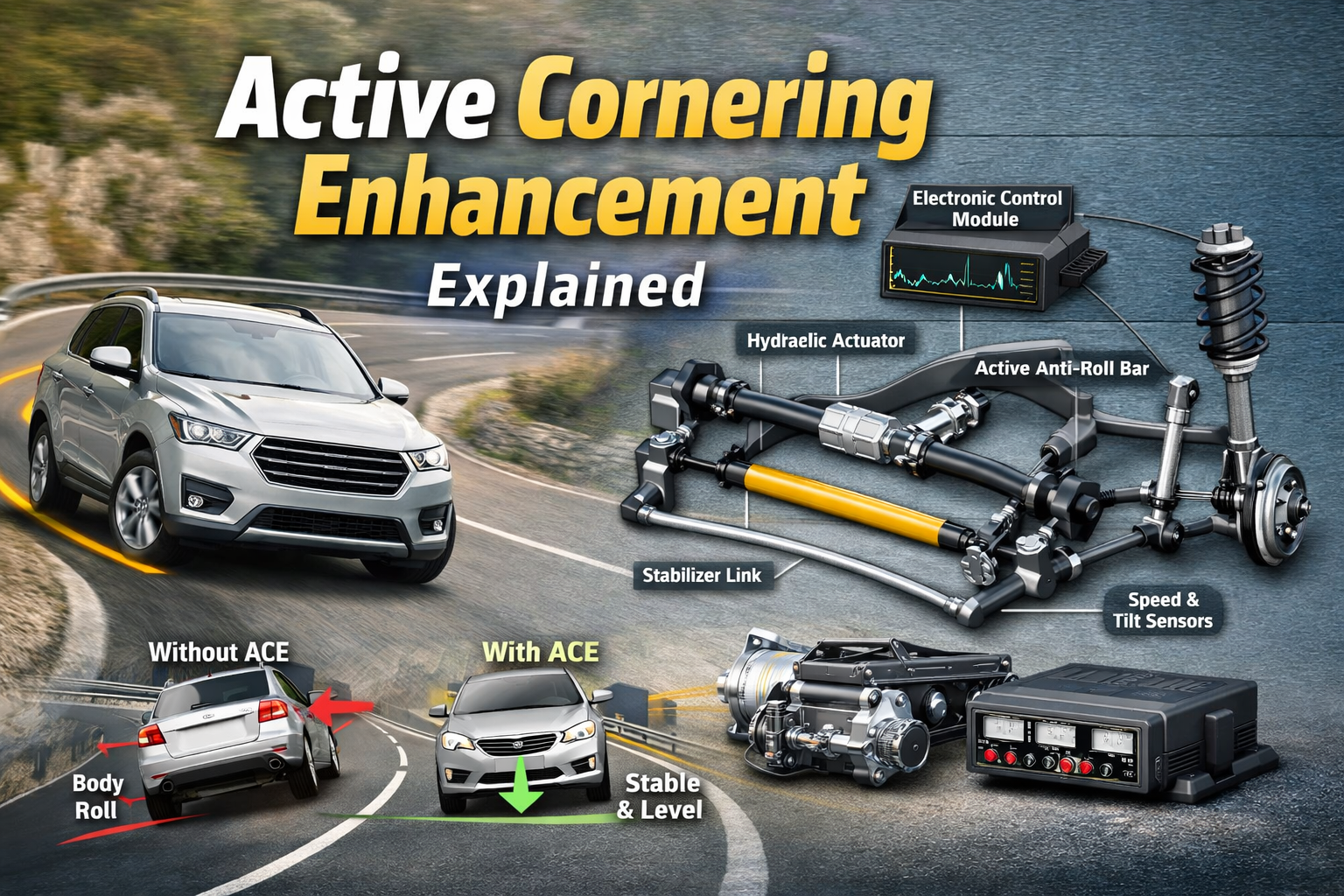
Active cornering enhancement is a vehicle technology designed to improve stability when a car moves through bends and curves. It helps reduce body roll, which is the leaning feeling passengers often notice when the vehicle changes direction at speed.
For many drivers, this feature sounds technical at first, but its purpose is quite practical. It aims to make driving feel smoother, safer, and more controlled, especially in larger vehicles such as SUVs and premium models built for comfort and performance.
What Is Active Cornering Enhancement?
Active cornering enhancement is a handling system that supports the vehicle during turns by limiting excessive lean. In simple terms, it helps the car stay flatter on the road, which improves balance and gives the driver a more secure feeling behind the wheel.
This system is often linked with suspension and anti-roll technology. Instead of allowing the vehicle body to shift too much during cornering, active cornering enhancement reacts quickly and adjusts the system to maintain better posture and road contact.
Why Active Cornering Enhancement Matters in Modern Vehicles
Modern vehicles are expected to deliver more than just speed and power. Drivers also want safety, comfort, and confidence. Active cornering enhancement supports all three by helping the vehicle remain stable during sudden lane changes, winding roads, and everyday city driving.
This is especially important in taller vehicles that naturally experience more body movement in turns. By reducing that movement, the system improves driver control and passenger comfort, making journeys feel more composed and less tiring over time.
How Active Cornering Enhancement Works
Active cornering enhancement works by using sensors and control systems to monitor the vehicle’s behaviour in real time. When the system detects cornering forces, steering changes, or body movement, it reacts almost instantly to reduce leaning and improve stability.
Rather than waiting for the driver to feel the shift, the technology makes quick corrections behind the scenes. This fast response helps the vehicle stay more level, which can improve handling on both gentle curves and sharper bends.
Sensors and Vehicle Monitoring
Sensors are the foundation of the system. They gather information such as steering angle, vehicle speed, lateral movement, and suspension activity. This data gives the vehicle a clear picture of what is happening during a turn.
Once the information is collected, the control unit analyses it and decides how much support is needed. This real-time communication allows active cornering enhancement to react quickly, which is why it feels smooth rather than sudden or distracting.
Suspension and Anti-Roll Bar Response
After the system identifies body roll, it sends instructions to the suspension components or anti-roll bars. These parts respond by applying counterforce, helping the body remain more upright while the wheels maintain stronger contact with the road.
This balance is important because it improves the vehicle’s overall posture through the corner. A flatter vehicle usually feels more stable, more precise, and more comfortable, which is exactly what active cornering enhancement is designed to achieve.
Main Components of an Active Cornering Enhancement System
An active cornering enhancement system includes several important parts working together as one unit. These often include sensors, a control module, hydraulic or electronic actuators, and anti-roll bars or connected suspension components that respond during cornering events.
Each component has a clear role. Sensors collect information, the control unit processes it, and the actuators apply the needed adjustment. Without this teamwork, the system could not respond with the speed and precision required for modern driving conditions.
Key Benefits of Active Cornering Enhancement
One of the biggest benefits of active cornering enhancement is improved stability. The system helps reduce vehicle lean, making turns feel calmer and more controlled. This can boost driver confidence, especially on motorways, country roads, and busy urban routes.
Another major advantage is comfort. Passengers often feel less side-to-side movement when the system is active. This smoother experience can make long trips more enjoyable, especially in family vehicles or SUVs that carry more weight higher above the road.
Active Cornering Enhancement and Vehicle Safety
Safety is a major reason why active cornering enhancement matters. A vehicle that stays more balanced in corners is easier to control, especially during unexpected manoeuvres. That added control can support safer handling when the driver needs to react quickly.
Still, this system is not a replacement for careful driving. It is a support feature, not a guarantee against accidents. Drivers must still follow road conditions, speed limits, and safe driving habits to get the most benefit from any advanced handling technology.
Common Vehicles That Use Active Cornering Enhancement
Active cornering enhancement is commonly found in SUVs, luxury vehicles, and some performance-oriented models. These vehicles often benefit the most because their size, ride height, or design can create more noticeable body roll when entering a corner.
Manufacturers include such systems to improve comfort and road manners without making the ride too stiff. In many cases, this allows larger vehicles to feel surprisingly refined, giving drivers the confidence of a stable car with the practicality of a bigger body style.
Active Cornering Enhancement vs Traditional Suspension Systems
Traditional suspension systems are built to absorb bumps and support the vehicle’s weight, but they do not actively respond to cornering in real time. Their performance is fixed by design, which means body roll can become more noticeable during faster or sharper turns.
Active cornering enhancement adds intelligence to the equation. Instead of relying only on passive parts, it makes adjustments based on actual road and driving conditions. That real-time ability is what separates this technology from more basic suspension designs.
Standard Suspension
Standard suspension systems do an important job by keeping the ride comfortable and predictable. They are simpler, widely used, and generally less expensive to maintain than advanced systems with electronic or hydraulic assistance.
However, passive suspension has limits. It cannot instantly adapt when the vehicle enters a curve with extra force. As a result, the body may lean more than desired, which can reduce comfort and make handling feel less precise.
Active Systems
Active systems respond dynamically, meaning they can adjust when needed instead of staying fixed. This makes them more suitable for drivers who want a blend of comfort and sharper road control without choosing an overly firm suspension setup.
Because the system works in real time, it can offer support exactly when the vehicle needs it most. That makes active cornering enhancement especially useful in vehicles designed for mixed use, including city traffic, open roads, and longer travel.
Signs of Problems With Active Cornering Enhancement
Like any advanced vehicle feature, active cornering enhancement can develop faults over time. Drivers may notice warning lights, unusual leaning during turns, a rougher driving feel, or changes in how stable the vehicle feels on curved roads.
In some cases, the issue may come from a sensor, hydraulic line, actuator, or control unit. Even a small fault can affect system performance, so it is wise to have the vehicle inspected early rather than waiting for the problem to grow worse.
Maintenance and Repair Considerations
Maintenance for active cornering enhancement depends on the type of system used in the vehicle. Some setups require checks on hydraulic fluid, while others depend more on electronics, sensors, and wiring that should be inspected during routine servicing.
Repairs can be more expensive than those for basic suspension systems because the technology is more complex. Even so, proper maintenance can help prevent major issues and keep the system working as intended for longer periods of vehicle ownership.
Is Active Cornering Enhancement Worth It?
For many drivers, active cornering enhancement is worth having because it improves both comfort and control. It is especially valuable in larger vehicles where body roll can affect the driving experience more noticeably than in smaller, lower cars.
The answer often depends on driving habits and vehicle type. Someone who values smooth handling, family comfort, and secure road behaviour may appreciate it greatly. For others, it may simply be a helpful extra rather than a must-have buying feature.
Final Thoughts
Active cornering enhancement is an advanced yet practical system that helps vehicles stay more stable during turns. By reducing body roll and improving balance, it supports safer handling, greater passenger comfort, and a more confident driving experience.
Understanding this feature makes it easier for buyers and drivers to recognise its value. Whether you are researching a car specification or simply learning how modern handling systems work, active cornering enhancement stands out as a smart innovation in vehicle design.
