

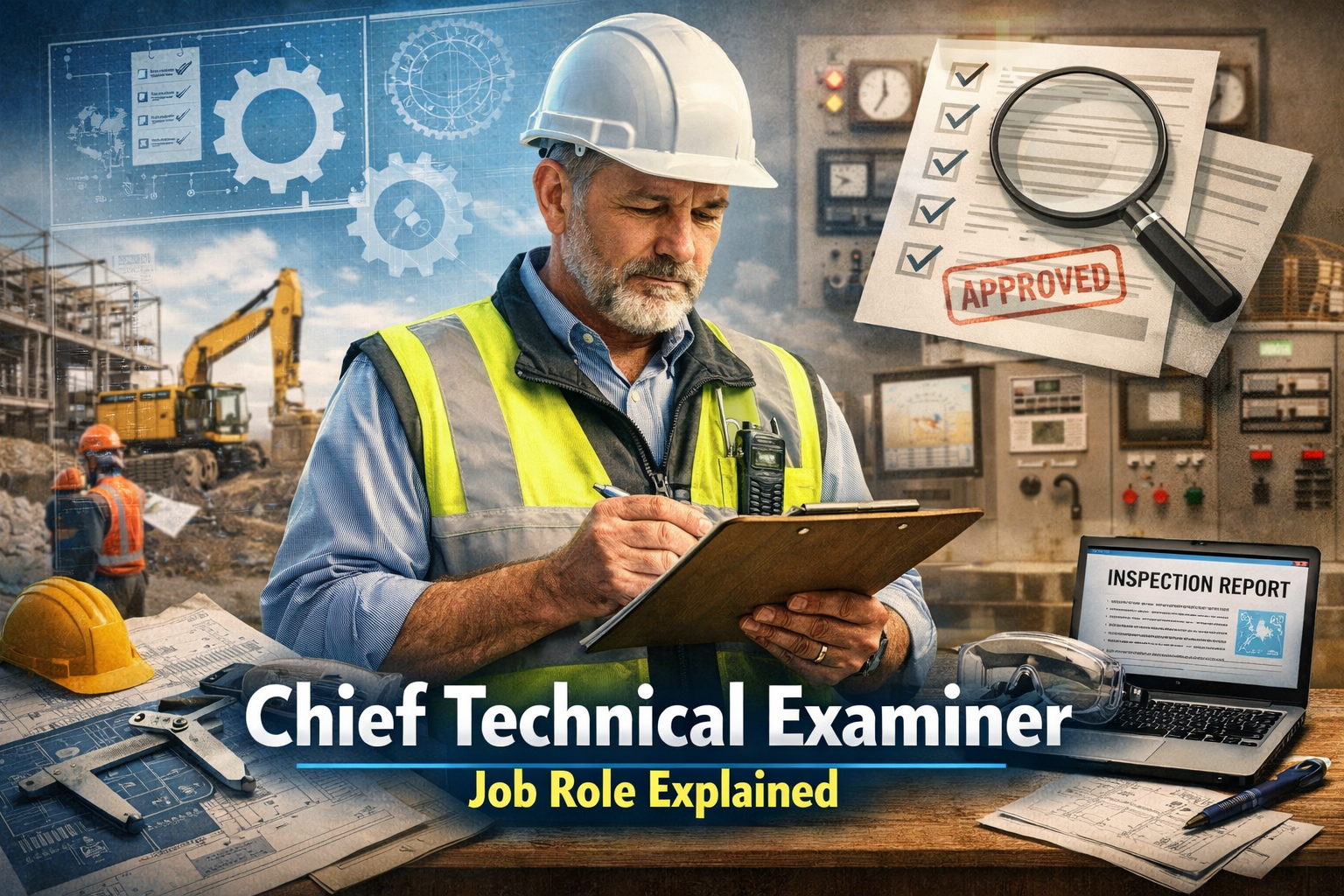
A chief technical examiner is a senior professional who checks, verifies, and approves technical work so it meets required standards. This role sits at the point where technical accuracy, safety, and compliance must be proven, not just assumed.
In many organisations, the chief technical examiner acts as a trusted gatekeeper. They ensure inspections are carried out correctly, reports are reliable, and technical decisions are backed by evidence. Their judgement protects people, budgets, and reputations.
Who Employs a Chief Technical Examiner?
A chief technical examiner is commonly employed by government departments, public works authorities, and regulatory bodies. These organisations rely on examiners to confirm that projects and equipment meet legal and safety requirements before approval.
You will also find the role in utilities, transport departments, and inspection agencies. Some large private organisations use the same title for senior staff who lead audits, acceptance testing, and technical compliance reviews.
What Does a Chief Technical Examiner Do?
At its core, the job is about making sure technical work is correct, safe, and properly documented. A chief technical examiner reviews results, verifies site conditions, and checks if the work matches the approved drawings, specifications, and standards.
This role often blends office-based review with real-world inspection. One day may involve reading reports and analysing test data, while the next may require visiting a site to confirm materials, measurements, workmanship, and safety procedures.
Key Responsibilities of a Chief Technical Examiner
A chief technical examiner leads technical inspections and ensures they are done with consistent methods. They may inspect installations, evaluate test findings, and confirm that projects follow codes, regulations, and internal quality systems.
They also review technical documents and sign off when requirements are satisfied. In many workplaces, the chief technical examiner supervises junior examiners, assigns tasks, and trains teams to produce accurate inspections and clear reporting.
Daily Tasks and Workflow
A typical day can begin with planning inspections and checking priorities. The chief technical examiner reviews pending cases, assigns team members to sites or tests, and ensures the right tools, checklists, and safety steps are prepared.
Later, they may conduct site visits, verify readings, and speak with engineers or contractors to clarify technical points. The day often ends with writing findings, approving reports, and recommending corrective actions where non-compliance is identified.
Skills Needed to Succeed as a Chief Technical Examiner
Strong technical knowledge is essential, but attention to detail is what makes it powerful. A chief technical examiner must notice small issues that can become serious failures, such as incorrect tolerances, poor workmanship, or missing documentation.
Communication is equally important because the job involves explaining findings clearly. The best examiners write reports that are easy to follow, speak confidently in meetings, and guide teams without creating conflict or confusion.
Qualifications and Education Requirements
The requirements for a chief technical examiner vary, but many roles expect a diploma or degree in engineering, technology, or a related field. Employers also value hands-on experience with inspections, testing procedures, and technical documentation.
Certifications can strengthen credibility, especially in regulated industries. Many organisations look for proven experience in quality assurance, safety compliance, or field supervision before promoting someone into the chief technical examiner position.
Chief Technical Examiner vs Similar Job Titles
A chief technical examiner is often confused with a senior technical officer, but the focus is different. Senior technical officers may manage operations, while the chief technical examiner concentrates on verification, inspection quality, and final technical approval.
Compared to a quality assurance manager, the chief technical examiner is usually closer to the technical evidence. They may lead audits too, but their authority often centres on technical examination, compliance checks, and inspection sign-offs.
Industries Where the Chief Technical Examiner Is Most Common
In civil and construction projects, the chief technical examiner checks structural work, materials, and site compliance. They help ensure that public infrastructure is built to specification and that safety rules are followed from foundation to finish.
The role is also common in electrical and mechanical inspection, manufacturing, and industrial safety. In testing laboratories, a chief technical examiner may verify procedures, confirm calibration accuracy, and ensure results are valid and defensible.
Tools, Standards, and Documentation Used
A chief technical examiner depends on reliable tools, from measurement devices to testing instruments and calibration equipment. They also use checklists and inspection templates to make sure every assessment follows a consistent, repeatable method.
Standards and codes are another key part of the toolkit, guiding what “acceptable” really means. Documentation matters just as much as physical inspection, because strong records protect the organisation during audits, disputes, or safety investigations.
Salary, Benefits, and Career Growth
The salary of a chief technical examiner depends on sector, experience, and responsibility level. Government and regulated industries may offer stable benefits, while private organisations may pay more when the role carries high accountability and risk.
Career growth can be strong because the role builds authority and leadership. Many chief technical examiners progress into quality management, compliance leadership, technical auditing, project oversight, or consultancy roles where deep inspection expertise is valued.
Common Challenges in the Chief Technical Examiner Role
One major challenge is pressure, because decisions often affect timelines and budgets. A chief technical examiner must remain fair and evidence-based, even when people push for faster approvals or try to downplay technical issues.
Another challenge is staying up to date with changing standards and new technology. The role requires continuous learning, because outdated practices can lead to errors, safety incidents, or failed audits that damage trust and performance.
FAQs
Many people ask if the chief technical examiner is a government job. It often is, but the title can also appear in private inspection bodies, utilities, and large engineering organisations that run strict compliance and quality systems.
People also ask what matters most for success in this role. The strongest chief technical examiner combines technical skill with integrity, clear reporting, and calm leadership. When you can verify facts, communicate well, and guide teams, you stand out.
