

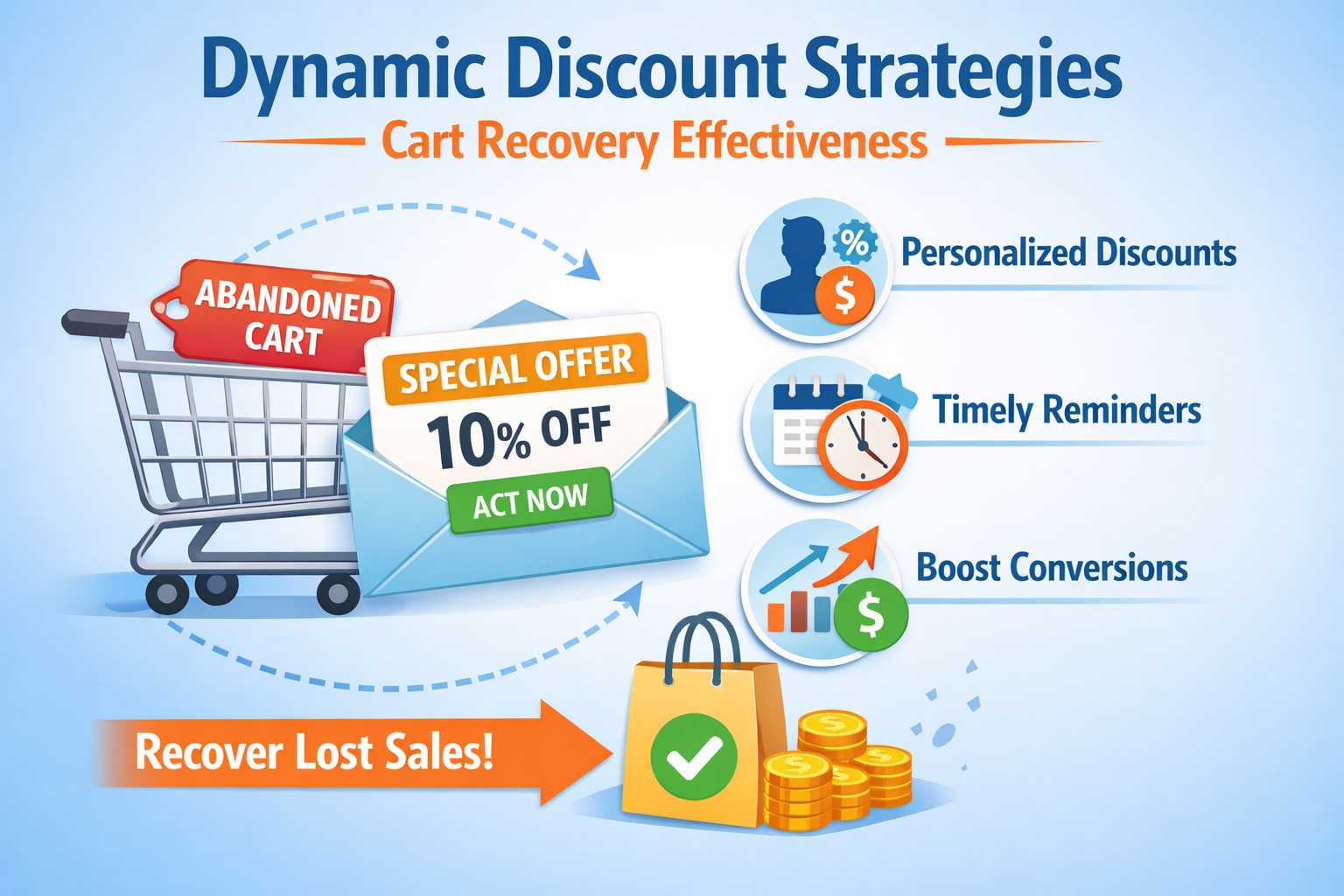
In modern eCommerce, abandoned carts remain one of the biggest barriers to consistent revenue growth. Many shoppers browse products, add items to their cart, and leave before completing checkout. This is where dynamic discount strategies cart recovery effectiveness becomes an important topic for online store owners.
Instead of offering the same coupon to every visitor, dynamic discount strategies use customer behavior, timing, and purchase intent to deliver smarter offers. This guide explains how these strategies work, why they matter, and how businesses can use them to recover lost sales more efficiently.
What Is Cart Abandonment in eCommerce?
Cart abandonment happens when a customer adds products to an online shopping cart but exits the website before finishing the purchase. This behavior is extremely common in eCommerce and affects both small stores and large online retailers across many industries.
There are many reasons shoppers abandon carts, including unexpected shipping charges, a complicated checkout process, limited payment options, or simple hesitation. Because of these issues, businesses lose potential revenue every day and must find better ways to bring those customers back.
Understanding Dynamic Discounts in Online Selling
Dynamic discounts are flexible promotional offers that change according to customer data, cart value, browsing patterns, or purchase history. Unlike fixed discounts, they are not one-size-fits-all. They are designed to match the shopper’s situation and improve the chance of conversion.
For example, one customer may receive free shipping after abandoning a low-cost cart, while another may get a ten percent discount on a high-value purchase. This personalized approach makes offers feel more relevant and supports stronger dynamic discount strategies cart recovery effectiveness.
Why Dynamic Discount Strategies Cart Recovery Effectiveness Matters
The reason businesses focus on dynamic discount strategies cart recovery effectiveness is simple: not every abandoned cart requires the same response. Some shoppers only need a reminder, while others may need an extra incentive to complete their order. Personalized recovery improves decision-making.
This strategy also protects profit margins better than generic discounting. If a business gives every visitor a large coupon, it may recover some sales but lose money overall. Dynamic discounting helps brands recover revenue while staying more controlled and data-driven.
How Dynamic Discount Strategies Work for Cart Recovery
Dynamic discount systems use customer signals to decide when and how to trigger an offer. These signals may include time spent on the site, total cart value, device type, loyalty status, previous purchases, or how close the shopper came to completing checkout.
Once the system identifies useful patterns, it can send the right incentive through email, SMS, popups, or retargeting ads. This creates a more strategic and personalized recovery path that supports improved conversions without overusing aggressive price cuts.
Behavior-Based Discounts
Behavior-based discounts are triggered by actions a shopper takes before leaving the site. For example, a customer who repeatedly views a product page or removes and re-adds items to the cart may show high interest but lingering hesitation.
In that case, the business can send a small incentive tailored to that behavior. This method feels smarter than random promotions because it responds directly to signals of intent, which often improves the overall performance of cart recovery campaigns.
Time-Based Discount Triggers
Timing can strongly influence whether a recovery message succeeds or fails. Sending a discount too early may reduce profit unnecessarily, while waiting too long may cause the customer to forget the purchase or choose a competitor instead.
Many brands test reminders after one hour, six hours, or twenty-four hours to find the best response window. Time-based discounts work best when the offer feels timely, relevant, and carefully placed within the shopper’s decision-making journey.
Customer Segment-Based Offers
Segment-based discounting means offering different incentives to different groups of shoppers. A first-time visitor may respond well to free shipping, while a repeat customer with strong brand trust may only need a gentle reminder to return.
Likewise, high-value shoppers may deserve a more premium recovery strategy than bargain-driven visitors. Segmenting customers makes dynamic discount strategies cart recovery effectiveness stronger because each group receives an offer that matches its behavior and likely motivation.
Key Factors That Influence Cart Recovery Effectiveness
Several elements affect how successful a discount strategy will be. These include the size of the discount, the type of product, the speed of follow-up, the device used by the shopper, and how simple or difficult the checkout process feels.
Trust also plays a major role. Even a good discount may fail if the website looks unreliable or hidden fees appear at the final step. For strong results, businesses must combine incentives with transparency, usability, and a smooth buying experience.
Benefits of Using Dynamic Discount Strategies for Abandoned Carts
One of the biggest benefits of dynamic discount strategies is improved conversion rates. Personalized offers are more likely to match what the customer actually needs, making them more effective than generic promotions sent to every abandoned cart.
Another major advantage is better use of promotional budgets. Rather than reducing prices across the board, businesses can reserve stronger offers for situations where they are truly needed. This supports higher recovered revenue, stronger engagement, and more balanced long-term profitability.
Best Types of Discounts for Cart Recovery Campaigns
Not every discount type produces the same result. Some customers respond well to a percentage-based offer, while others care more about free shipping or a sense of urgency. Choosing the right incentive is essential for maximizing campaign performance.
The best approach depends on product category, order value, brand positioning, and customer expectations. Testing multiple discount formats helps businesses discover what drives the highest response without damaging profit margins or training buyers to wait for constant promotions.
Percentage-Based Discounts
Percentage discounts are among the most common tools in cart recovery. A small offer such as five or ten percent can be enough to push a hesitant shopper toward checkout, especially when the product already has strong interest and demand.
However, percentage discounts should be used carefully. Large discounts may recover carts but lower profitability and shape customer behavior in unhealthy ways. Businesses should test different percentages to find the smallest effective offer that still motivates action.
Free Shipping Offers
Free shipping is often one of the most powerful incentives in eCommerce. Many shoppers abandon carts because shipping costs feel like an unexpected penalty at the final stage. Removing that cost can instantly make the order feel more acceptable.
In many cases, free shipping performs better than a direct price discount because customers see it as a practical benefit rather than a sales trick. It can be especially effective for low- to mid-priced items where shipping fees create the main objection.
Limited-Time Exclusive Deals
Limited-time deals create urgency and encourage customers to act quickly. When a recovery email says an offer expires in a few hours or by the end of the day, it reduces procrastination and pushes the shopper toward a decision.
Still, urgency must be used honestly and carefully. If every discount appears fake or endlessly repeated, customers lose trust. Exclusive short-term offers work best when they feel special, believable, and connected to real shopping behavior.
Common Mistakes That Reduce Dynamic Discount Strategies Cart Recovery Effectiveness
A frequent mistake is offering discounts too quickly. If shoppers learn that every abandoned cart automatically triggers a coupon, they may delay purchases on purpose. This reduces margins and teaches customers to wait for incentives instead of buying immediately.
Another mistake is failing to segment customers or test performance. Sending the same email, message, and discount to every shopper often produces weak results. Businesses also lose opportunities when they ignore checkout problems and rely only on promotions to fix them.
How to Measure Dynamic Discount Strategies Cart Recovery Effectiveness
To evaluate success, businesses need to track more than recovered orders. Important metrics include cart recovery rate, conversion rate after the offer, recovered revenue, average order value, and margin impact. These numbers show whether the strategy truly supports business growth.
Email and SMS performance also matter. Open rates, click-through rates, and response timing help reveal how shoppers react to each offer. Over time, these insights help marketers refine message design, improve targeting, and increase dynamic discount strategies cart recovery effectiveness.
Tools and Technology That Support Dynamic Discount Strategies
Modern eCommerce platforms provide many tools for smarter cart recovery. Email automation systems, customer segmentation software, AI-driven recommendation engines, and exit-intent popup tools all help businesses deliver targeted incentives at the right time.
Integration is especially important. When customer data, behavior tracking, and discount delivery work together, brands can build more accurate recovery campaigns. This technology allows businesses to automate personalization while still keeping control over timing, discount size, and profitability.
Best Practices to Improve Results Over Time
The most successful stores treat cart recovery as an ongoing process, not a one-time setup. They test subject lines, offer types, timing windows, and customer segments regularly. Even small adjustments can produce meaningful improvements in revenue recovery and conversion performance.
It is also wise to focus on the full customer experience. A discount may bring someone back, but trust badges, clear return policies, faster checkout, and honest pricing help close the sale. Strong recovery combines incentives with a better overall shopping journey.
Final Thoughts
Dynamic discount strategies cart recovery effectiveness is not about giving away unnecessary discounts. It is about using data, timing, and customer understanding to deliver relevant offers that recover lost sales while protecting business value and brand credibility.
For online stores that want smarter growth, dynamic recovery strategies offer a practical path forward. By testing personalized offers, measuring outcomes carefully, and improving the full checkout experience, brands can turn abandoned carts into completed purchases and stronger customer relationships.
