

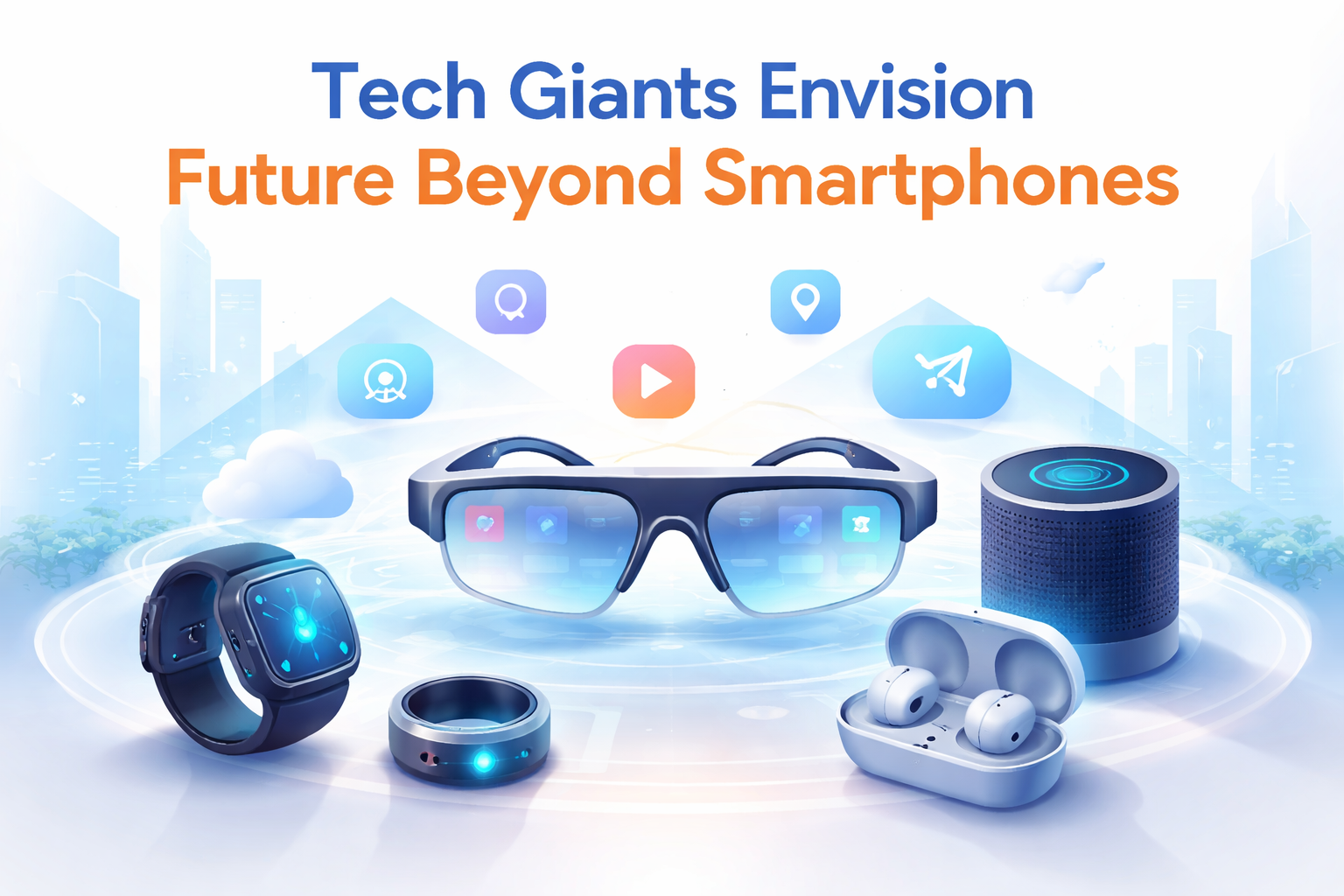
The digital world has changed quickly over the last two decades. Smartphones became the center of daily life, helping people communicate, shop, work, study, and relax. Yet the next major shift may already be starting as companies look for new ways to connect people with technology.
Today, tech giants envision future beyond smartphones by investing in smarter, smaller, and more natural devices. Instead of depending on one screen in the hand, users may soon interact through glasses, wearables, voice tools, and intelligent systems that work quietly in the background.
What Does Tech Giants Envision Future Beyond Smartphones Mean?
This phrase means that the biggest technology companies are imagining a future where smartphones are no longer the main digital device. Phones may still exist, but they may not remain the center of all online activity and personal computing.
When people say tech giants envision future beyond smartphones, they are talking about a new era of technology. In this future, digital experiences may become more seamless, more personal, and less tied to a touchscreen. Technology could feel more natural and more deeply woven into everyday life.
Why Smartphones May Not Stay on Top Forever
Smartphones are powerful, but they also have limits. Screens can be distracting, battery life remains a problem, and constant app switching often makes tasks feel slower rather than simpler. Many users already feel overwhelmed by notifications and endless digital clutter.
At the same time, the smartphone market has matured. New phone models often bring only small upgrades, not dramatic changes. Because of this, major companies are searching for the next breakthrough product category that can offer a more exciting and useful experience.
The Main Technologies Leading the Shift
Artificial Intelligence and Smart Assistants
Artificial intelligence is one of the biggest reasons why the industry is moving beyond traditional smartphones. AI can understand voice commands, predict user needs, summarize information, and complete tasks without requiring people to open multiple apps.
As AI improves, it can turn devices into true assistants instead of simple tools. This makes everyday tasks faster and easier. Rather than touching a screen again and again, users may simply speak, gesture, or rely on background intelligence to get things done.
Wearable Devices and Smart Glasses
Wearable technology is another major step in this shift. Smartwatches already let users check messages, monitor fitness, and receive alerts without reaching for a phone. Smart rings and health trackers add even more convenience by collecting useful information all day.
Smart glasses may push this idea much further. They could display directions, translate speech, show reminders, or answer questions in real time. That is one reason tech giants envision future beyond smartphones with wearables playing a much larger role in normal life.
AR, VR, and Mixed Reality
Augmented reality, virtual reality, and mixed reality are also important parts of this transformation. These technologies allow digital content to appear in physical space or place users inside immersive digital environments. This creates a more interactive and engaging kind of computing.
Instead of looking down at a small screen, people may look around them and see useful information layered onto the real world. This could change how people learn, design, play games, collaborate, and even shop for products in the future.
How Tech Giants Envision Future Beyond Smartphones in Daily Life
In daily life, this future could feel smoother and less disruptive. A person wearing smart glasses may get turn-by-turn navigation while walking. An AI earbud may summarize messages or answer questions without requiring a screen at all.
At home, intelligent devices may manage schedules, control lighting, recommend meals, and support entertainment based on habits and preferences. At work, lightweight wearables may handle meetings, quick updates, and communication with less effort than pulling out a phone every few minutes.
Big Companies Driving the Post-Smartphone Vision
Many well-known companies are already shaping this direction. Apple continues developing wearables and spatial computing devices. Google is building stronger AI tools and experimenting with more ambient forms of computing. Meta is heavily focused on smart glasses and immersive technology platforms.
Microsoft, Samsung, and other global brands are also exploring AI integration, mixed reality, and connected ecosystems. Their shared interest shows why the topic matters. It is not a random trend. It reflects a serious industry belief that tech giants envision future beyond smartphones for the next generation of users.
Benefits of Moving Beyond Smartphones
One major benefit is convenience. Devices that respond to voice, gestures, and context can reduce the need for constant screen tapping. This may help people save time and stay more focused during work, travel, exercise, or family activities.
Another benefit is personalization. Future devices may understand routines, preferences, and needs more deeply than today’s phones. They could offer health support, smarter reminders, and more relevant suggestions. This could make technology feel helpful instead of distracting or overwhelming.
Challenges That Could Slow This Future
Even though the idea is exciting, there are serious challenges. New hardware is often expensive, which makes adoption slower for average users. Many people also hesitate to wear unfamiliar devices in public, especially if they look awkward or feel uncomfortable.
Privacy is another major issue. Devices that listen, watch, and collect data throughout the day raise important questions. People want convenience, but they also want control. Until companies earn trust and improve security, some users may resist these new technologies.
Will Smartphones Fully Disappear?
Smartphones are unlikely to vanish overnight. They are deeply built into modern life, and billions of people depend on them every day. Most likely, phones will remain useful for many years even as new devices grow in popularity.
The more realistic future is gradual change. Smartphones may become one device among many rather than the main device for everything. Over time, their role could shrink as AI wearables, smart displays, and immersive tools become more capable and more common.
How Consumers Should Prepare for This Change
Consumers do not need to rush, but they should start paying attention. Watching trends in AI, wearables, and smart ecosystems can help people understand where personal technology is heading. Small shifts today may become major habits tomorrow.
It is also wise to learn about privacy settings, device compatibility, and digital wellbeing. The more connected future becomes, the more important it will be to manage data carefully. People who understand these issues early will adapt more easily to new tools.
Tech Giants Envision Future Beyond Smartphones in Work and Education
The workplace may change in major ways. Employees could use wearable tools for scheduling, note-taking, translation, and remote collaboration. Meetings may include digital overlays, real-time summaries, and voice-based help without anyone constantly checking a phone.
Education may also benefit from this shift. Students could explore science, history, and design through immersive lessons instead of flat textbook pages. Teachers may use smart tools to personalize learning, answer questions quickly, and create more engaging classroom experiences.
Common Myths About a Post-Smartphone World
One common myth is that smartphones will disappear very soon. That is unlikely. Most technology transitions happen step by step, not all at once. Old and new devices usually exist together for a long time before one becomes less important.
Another myth is that future devices will only be for entertainment. In reality, the biggest value may come from productivity, health, accessibility, and communication. The goal is not simply to replace a phone, but to create a more natural and useful digital environment.
Final Thoughts on the Next Digital Era
The phrase tech giants envision future beyond smartphones reflects a major shift in how the technology world sees tomorrow. Companies are no longer focused only on making better phones. They are trying to build a world where digital interaction feels faster, smarter, and less dependent on a screen.
This future may include AI assistants, smart glasses, wearables, and immersive computing experiences that blend naturally into daily life. Smartphones will likely remain important for some time, but their dominance may slowly decline as new tools become more practical and more appealing.
For everyday users, this is not just a tech headline. It is a sign of how communication, learning, work, and personal habits may evolve. The next digital era may not fit inside a pocket in the same way. Instead, it may live all around us, quietly helping in smarter ways.
As innovation continues, one thing becomes clear: tech giants envision future beyond smartphones because they believe the next chapter of technology will be more connected, more intelligent, and more human-centered than ever before.
Conclusion
We are standing at the edge of a new technological chapter. The smartphone changed the world, but the next wave may change how people experience technology altogether. Devices may become less visible, yet more powerful and more deeply connected to daily routines.
That is why tech giants envision future beyond smartphones with such confidence. They see a world where technology serves people in simpler and smarter ways. For users, the best approach is to stay informed, stay curious, and be ready for a future that may look very different from today.
